
Last updated November 16, 2026
 Sweep & inspection
 Caps & crowns
 Flue relining
 Masonry repair
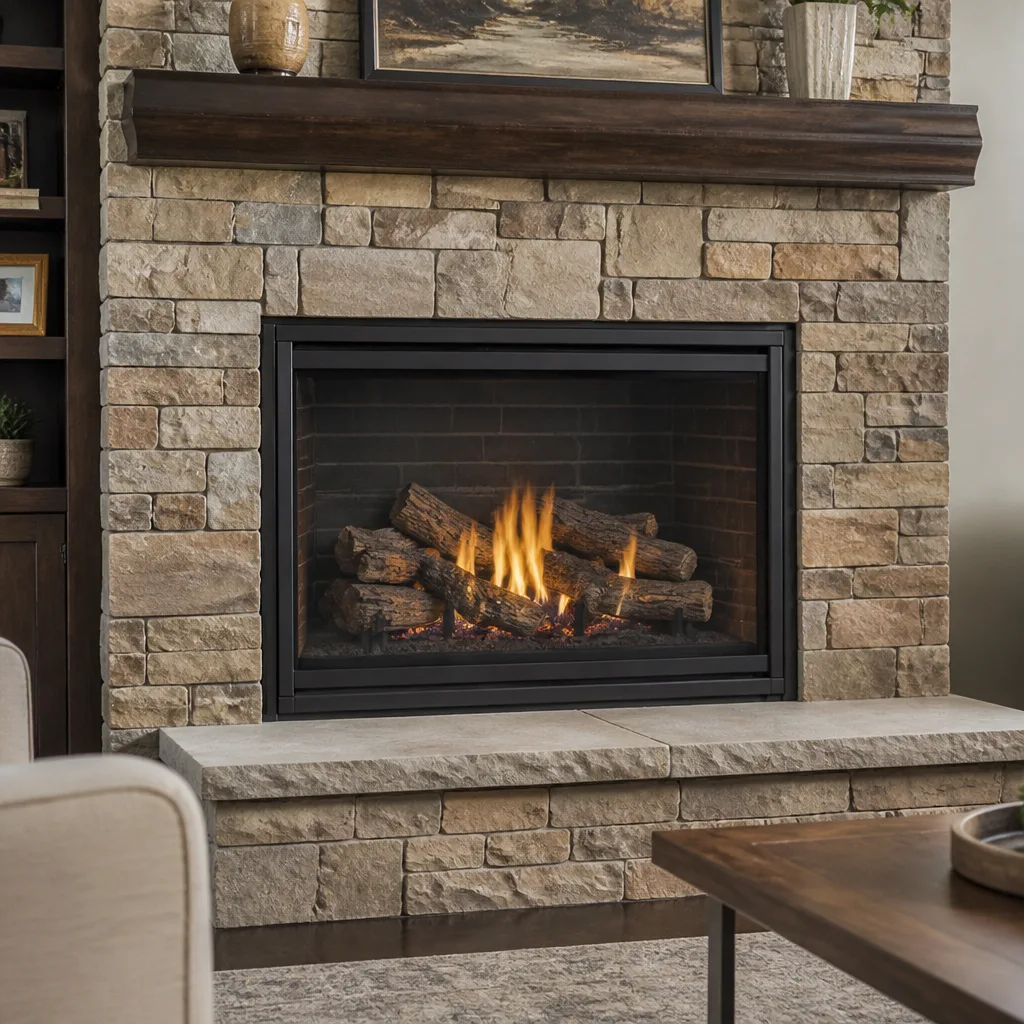 Gas fireplace service
Level 1 sweep and inspection to the NFPA 211 annual standard - flue, crown, cap, and flashing checked and photographed
Chimney sweep logs do not sweep chimneys. They loosen some creosote - which then falls where a brush and vacuum still have to collect it.
Chimney Cleaning Warning Signs: An Enterprise Homeowner’s Reference Guide
The chimney fire you might hear roaring in the flue isn’t the warning sign. It’s the event. The real warnings showed up months earlier: a white powder streak crawling down the exterior brick, a draft that felt slightly off, a fire that didn’t want to catch the way it used to. Most homeowners in Enterprise wait for the dramatic symptoms, and by then the damage has already done its work. This guide teaches you to read the early signals, the ones that are subtle, specific to our desert climate, and only obvious once you know what “normal” actually looks like.
Quick Answer
The early warning signs of a chimney that needs cleaning are: a campfire smell in summer when no fire has been lit, white salt staining (efflorescence) on exterior masonry, lazy smoke that lingers in the firebox instead of rising, spalling brick faces, and a damper that sticks or feels stiff. Any one of these means it’s time for an inspection. None of them require panic, but none of them should wait a season either.
Styles & brands we work with
- Sweep & inspection
- Caps & crowns
- Flue relining
- Masonry repair
- Gas fireplace service
Table of Contents
- Why the Obvious Warning Signs Are Already Too Late
- The Smell Profile: What Creosote Stages Actually Tell You
- Efflorescence: White Staining After Enterprise’s Monsoon Months
- What “Lazy” Smoke Inside the Firebox Reveals About Draft
- Spalling Brick vs. Heat-Stress Cracking: They Look Alike, They Don’t Fix the Same
- Why a Sticking Damper Isn’t Minor
- A Step-by-Step Reading of Your Own Chimney
- How Often Should You Book a chimney sweep?
Why the Obvious Warning Signs Are Already Too Late
The signs everyone knows about, smoke rolling into the room or a fire that won’t draft at all, are end-stage symptoms. They mean the flue is already restricted or the pressure balance has already failed. By the time a homeowner in Enterprise notices those, the creosote has usually been building for multiple seasons and the first real cleaning is overdue.
Chimneys fail slowly and quietly. The deposit that fuels a chimney fire accumulates a fraction of an inch at a time. A hairline crack in the flue tile opens over repeated heating and cooling. A masonry joint absorbs moisture for months before the first visible stain appears. Each of these gives you warning. The trouble is that the warning is quiet, and it happens in places most people never look.
So the useful question isn’t “is my chimney smoking?” It’s “what does my chimney look like on a normal day?” That baseline is what makes the early signals readable. Learn your chimney’s default behavior during a normal fire and a normal off-season, and any departure from that baseline becomes a message worth acting on.
Where to Actually Look
- Exterior masonry: the top third of the chimney, especially the south- and west-facing sides where sun and weather hit hardest.
- The firebox: the back wall, the damper frame, and the smoke shelf just above the damper.
- The throat: where the firebox narrows into the flue, the transition point where most draft problems begin.
- The cap and crown: visible from the ground with binoculars, and the first place wind-driven rain gets in.
- The room itself: that faint smoky scent on a day the fireplace has been cold for hours.
Each of these areas ages differently in our climate, and each produces its own class of warning sign. The rest of this guide walks through them one at a time.
The Smell Profile: What Creosote Stages Actually Tell You
If you can smell a campfire in the room in July, when no fire has been lit for months, your chimney is telling you something. That smell is creosote off-gassing, and it becomes stronger and more persistent as the deposit moves from stage 1 to stage 2. In a hot, dry climate, the chimney is essentially baking that deposit all summer.
Creosote comes in three recognizable forms, and each one is a different level of concern:
- Stage 1: soot and light flake. A thin, dusty, flaky layer. It brushes off. This is the deposit a regular sweep is designed to remove, and it’s not a hazard yet.
- Stage 2: hard, crusty, and glazed at the edges. This is where the campfire smell becomes noticeable in warm weather. The deposit has baked onto the flue surface. A standard brush sweep won’t remove it fully.
- Stage 3: glazed, shiny, tarlike. This is the fuel load that makes a chimney fire possible. It is dense, hard, and needs mechanical removal by someone trained for it. A chimney fire fed by stage 3 creosote burns hot enough to crack tile.
Here’s the part homeowners miss. The smell doesn’t arrive with the danger. It begins in late stage 1 or early stage 2, long before the deposit glazes. A smoky scent in the summer is the earliest reliable way to know that a cleaning is due, and it’s the reason we tell people to note the smell rather than wait for the visual check.
What “campfire smell” doesn’t mean is that you have a fire hazard today. It means the flue is carrying a heavier than normal deposit. The fix is a cleaning and an inspection, not alarm. This is exactly the kind of quiet signal that says book a sweep before burning season starts in Enterprise.
Efflorescence: White Staining After Enterprise’s Monsoon Months
Efflorescence is the white, powdery, saltlike staining that appears on exterior masonry. It happens when water soaks into brick or mortar and then migrates back out, carrying dissolved salts to the surface as it evaporates. Those salts stay behind as a white stripe or bloom. If you see it on your chimney, water is getting into the masonry and coming back out, again and again, through the wet and dry cycles of our monsoon season.
What makes this a chimney-cleaning warning sign rather than a cosmetic issue is what the water does during those cycles. Masonry is porous. Every time it absorbs moisture and then dries, the freeze-thaw and wet-dry action pushes on the mortar joints and the flue tiles. Over a few seasons, a joint that was tight starts to open, and an opening is a path inward.
Where Efflorescence Usually Shows Up
- A vertical white streak below the crown on the exterior.
- White bloom along the mortar joints near the top of the chimney.
- Powdery residue on the chimney face after the first heavy rain of the season.
A white streak that just appeared and easily wipes off is mild, but it means water has found a way in. A streak that has been there through several seasons and doesn’t wipe away means the masonry has been cycling moisture long enough that the joints deserve a closer look. Either way, an inspection that includes the chimney crown and the cap is the right next step.
One practical note about our desert climate: the heat makes efflorescence less frequent but louder when it appears, because the front face of a chimney can dry fast while the back stays damp. That asymmetry is why a handful of streaks on one side and no streaks on the other isn’t a good sign of health. It’s a sign that only one side is getting wet and drying, and the masonry isn’t venting evenly.
What “Lazy” Smoke Inside the Firebox Reveals About Draft
Watch a fire catch in the first ten minutes. Healthy draft will pull the smoke up and out of the firebox smoothly. Lazy smoke is the signal: the firebox fills with smoke that lingers and rolls rather than rising in a direct path up the flue. That lazy roll is a draft problem, and it shows up long before a full backdraft event spills anything into the room.
Draft is driven by the pressure difference between the warm flue and the cooler room. A few things can weaken it:
- Deposit restriction. A partial blocking layer of creosote narrows the flue and slows the exhaust. This is the most common cause and the one a chimney sweep resolves directly.
- Firebox to flue mismatch. The throat is too narrow for the size of the fire, so the exhaust can’t move fast enough to keep up with the heat.
- House pressure changes. Modern homes are tight, and a kitchen vent or a second appliance drawing air can change the pressure balance in the room. The firebox has less air to work with.
- Clogs or blockage at the top. A cracked cap, a bird nest, or a bent damper can all restrict flow.
The reason lazy smoke matters is that the smoke has to go somewhere. When draft is weak, it collects, it cools, and it condenses inside the flue as creosote. That’s the loop: weak draft accelerates deposit, deposit weakens draft. In our experience, a fire that used to catch readily and now needs help to get moving is the clearest indication that a cleaning is overdue.
You don’t need to solve the draft troubleshooting yourself. The useful thing you can do is notice the change in behavior and describe it. “The smoke didn’t want to rise at first” is a valuable description for an inspector and a hard one to fake.
Spalling Brick vs. Heat-Stress Cracking: They Look Alike, They Don’t Fix the Same
Spalling means brick or masonry faces flaking off, popping, or peeling away from the surface. It looks similar to the hairline cracks that heat stress creates around the firebox, but the two come from opposite directions and need different fixes. A spalled brick is losing its face because of freeze-thaw moisture cycling. A heat-stressed brick is cracking because of repeated thermal expansion and contraction.
| Sign | Likely cause | What it suggests |
|---|---|---|
| Faces flaking off exterior brick | Moisture cycling and freeze-thaw | Water intrusion at crown or cap; moisture management is the issue |
| Hairline cracks near the firebox | Repeated heating and cooling | The brick is stable but the joint needs repointing before it widens |
| White powder beneath a flake | Efflorescence under a spalled face | Both moisture and stress are at work; inspection is the safe next step |
| Brick dust on the hearth or smoke shelf | Crumbling mortar or spalled interior | Something is degrading from the inside; a camera inspection can see it |
The spalling pattern is the more urgent of the two. It’s a moisture problem, which means it doesn’t plateau on its own and it’s the point where a chimney resurfaces or a repair is worth doing. This is where a system like HeatShield earns its place: it’s a resurfacing method designed to extend the life of a flue rather than mask a failing one. You don’t have to know the brand to spot the problem, but you do want whoever fixes it to know what’s underneath.
Why a Sticking Damper Isn’t Minor
A damper that sticks or feels slightly stiff when you open and close it sounds like a nuisance. It’s often the first sign that the smoke chamber or the flue liner is deforming. The damper sits at the throat, the narrowest part of the whole chimney system, and it’s the place where any change upstream shows up first.
Here’s the chain. Heat deforms the flue liner or the smoke chamber wall a little. That deformation narrows the throat or warps the frame the damper sits in. The damper gets stiff. The homeowner works it harder, which increases the chance of damaging the frame further, and the firebox draft weakens at the same time. Left alone, that stiffness can become a damper that won’t seat, which means the chimney has no way to close off the flue when the fireplace isn’t in use.
How to Read a Sticking Damper
- It was smooth before and now binds. This is the strongest signal. A damper that was always tight is different from one that changed.
- The stiffness has a hot feel. Open and close it after a fire has been going. If the resistance increases as the chimney heats up, that’s deformation responding to temperature.
- You hear scraping. Metal-on-metal scrape means the damper plate is dragging on the frame. That doesn’t fix itself.
Do not force a stuck damper. The mechanism sits above the firebox, and a damaged frame needs to be looked at, not muscled into place. If the damper has become genuinely stuck, stop operating the fireplace and book an inspection.
A Step-by-Step Reading of Your Own Chimney
You can do a useful first-pass look at your own chimney in about ten minutes, using nothing more than your eyes, your nose, and a flashlight. This isn’t a substitute for an inspection with a camera. It’s how you arrive at that inspection knowing what you saw.
- Step outside and look up. Check the exterior for white streaks, spalled brick faces, missing cap pieces, and a crown that looks cracked or holding water.
- Look at the cap from the ground. Binoculars help. Gelco caps are a common and sound option; what matters is that a cap is present and intact, not that the original one is.
- Open the firebox and smell. With no fire burning, the flue should smell like nothing much. A smoky or tarry scent is a sign of deposit.
- Run a flashlight up the flue. Shine it past the damper. You should be able to see clear, consistently patterned flue walls. Crusty or glossy surfaces and any visible narrowing are signs to report.
- Test the damper. Open and close it slowly. Note whether it moves evenly or binds, and whether the resistance changes when the chimney is hot versus cold.
- Light a small test fire. Watch the first smoke. Does it rise directly, or does it roll and linger in the firebox?
- Note the room. Any smoky smell in the room on a day the fireplace has been cold is worth writing down.
That’s the full visual and sensory check a homeowner can reasonably do. Everything you find becomes a useful note for the inspector. The important boundary: do not attempt to remove creosote yourself, and do not inspect the inside of a flue with a mirror and a drop light in a way that puts your face in the chimney opening. High-tension springs in a garage door are not the only thing in a home worth respecting; a flue full of glazed creosote is a serious safety concern and the work belongs to a trained professional with the right tooling.
How Often Should You Book a Chimney Sweep?
Most wood-burning chimneys should be cleaned annually. A gas fireplace or a wood stove has its own interval, and the honest answer is that the right interval depends on use and on what the inspection finds. An annual inspection is the baseline that lets you know whether the cleaning interval is right for you.
In Enterprise, the timing is a little more specific. Our desert climate gives you a long burning season with hot, dry months around it, and that cycle matters. Book a sweep before the first cold snap, not after it. The season that everyone saves for the last week of is the season where the schedule gets tight, and a chimney that’s been sitting through a hot summer is exactly the one you want checked before you light the first fire.
What the Annual Cycle Actually Looks Like
- Off-season check. A visual with a camera inspection in the warmer months is the easiest appointment to get.
- Cleaning. A standard sweep to remove stage 1 and stage 2 deposit. If the inspection finds glazed creosote, the plan changes.
- Repair, if needed. This is where chimney repair and the choice of a professional-grade liner or resurfacing system comes in.
- Inspection record. Keeping a record of each inspection means the next one starts with a baseline rather than from scratch.
Our technicians have up to experience, and the pattern we’ve seen holds up year after year: the chimneys that get looked at on a regular schedule are the ones that need the smallest jobs. The ones that wait for a symptom are the ones that need a repair.
Common Mistakes to Avoid
- Treating the summer campfire smell as harmless. It’s the earliest reliable sign of stage 2 deposit. If you notice it in a house in Enterprise and do nothing, you’re waiting for a visual symptom that arrives later.
- Assuming white staining is cosmetic. Efflorescence is water migrating through masonry. It’s a moisture-management message, not a cleaning product problem.
- Forcing a stiff damper instead of reading it. A damper that changed from smooth to stiff suggests deformation above it. Forcing it can turn a small repair into a larger one.
- Confusing spalling with heat cracks. They look similar on a brick face and they get different fixes. Guessing wrong wastes money, and guessing wrong on a moisture problem means the water keeps working.
- Cleaning only when the fire smokes into the room. By then you’ve skipped past a year of warning signs that were cheaper to act on.
- Using a general handyman for a chimney with structural symptoms. A chimney is a system: firebox, throat, smoke chamber, flue, crown, and cap. A specialist reads the whole system, not just the visible parts.
- Assuming a gas fireplace doesn’t need attention. A gas flue has its own inspection needs. It gets looked at on a schedule, not on an assumption.
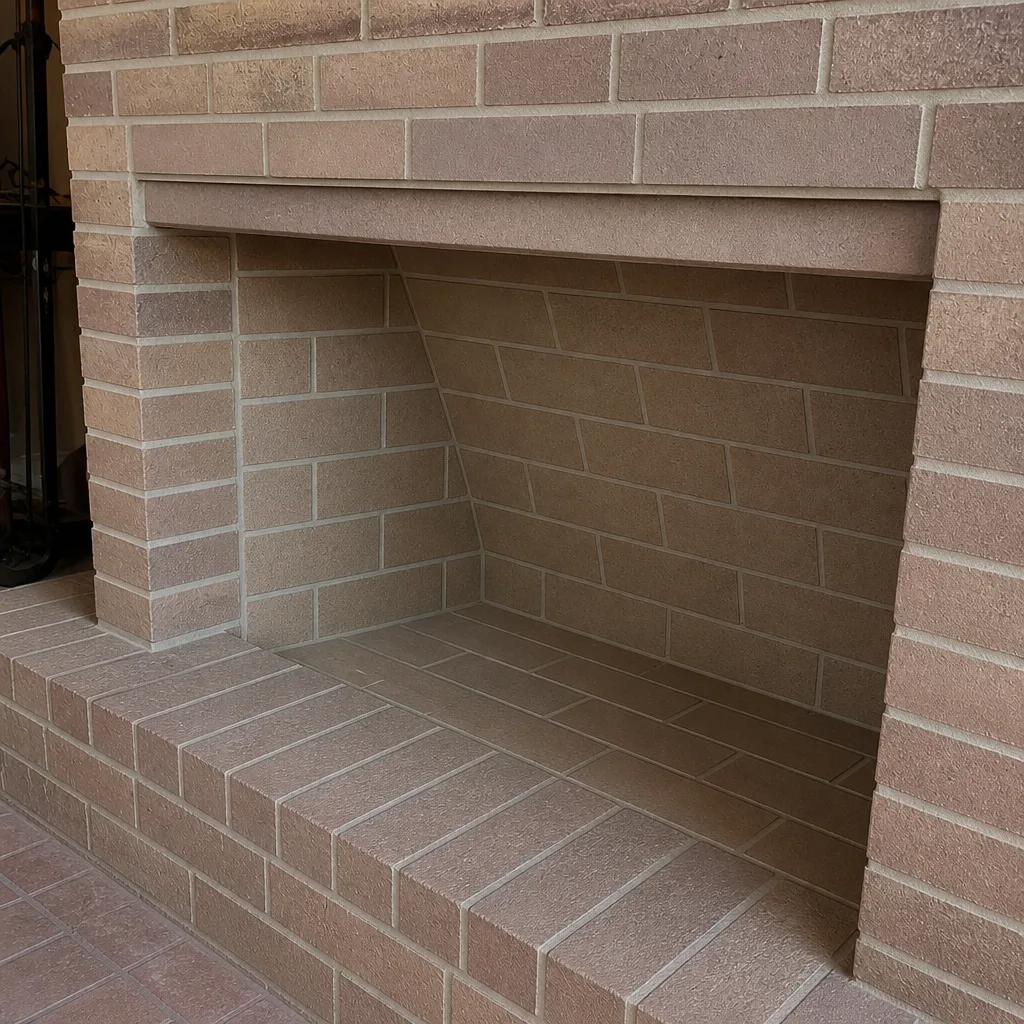
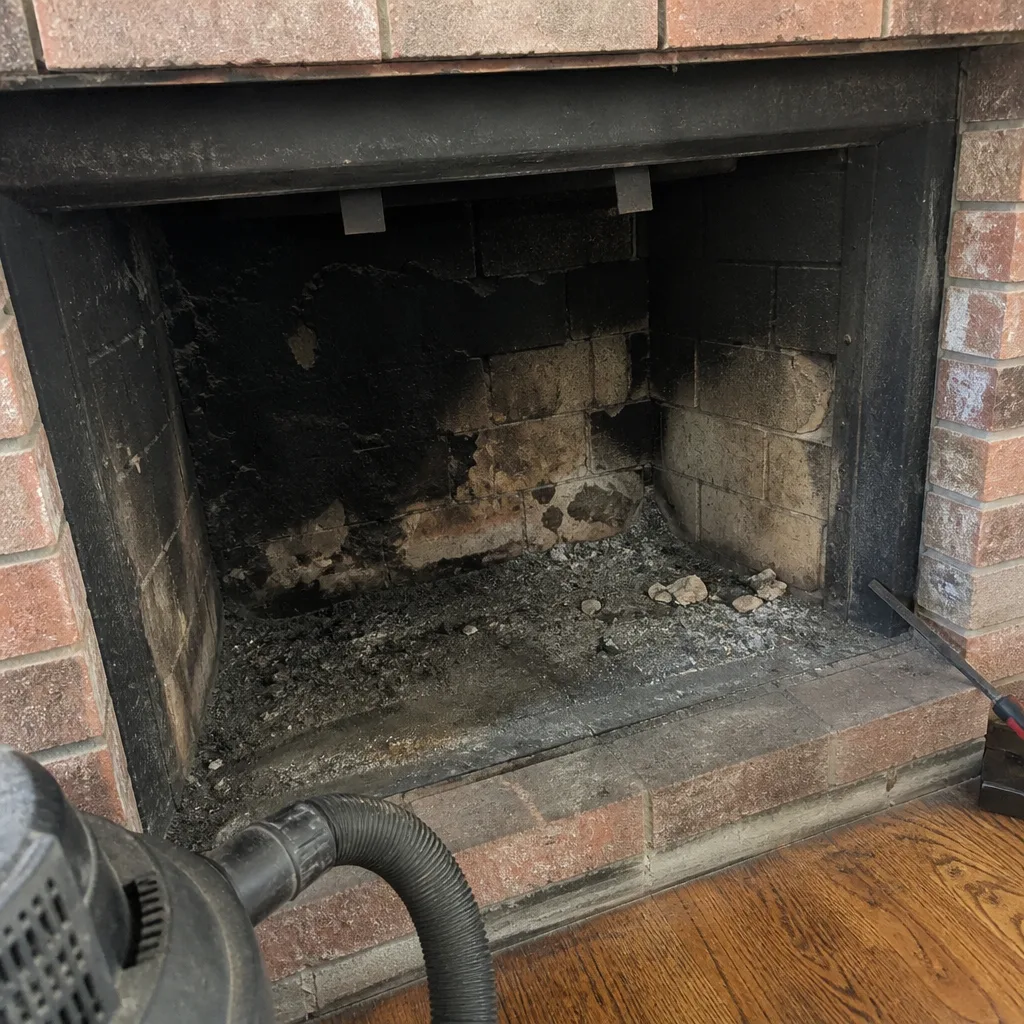
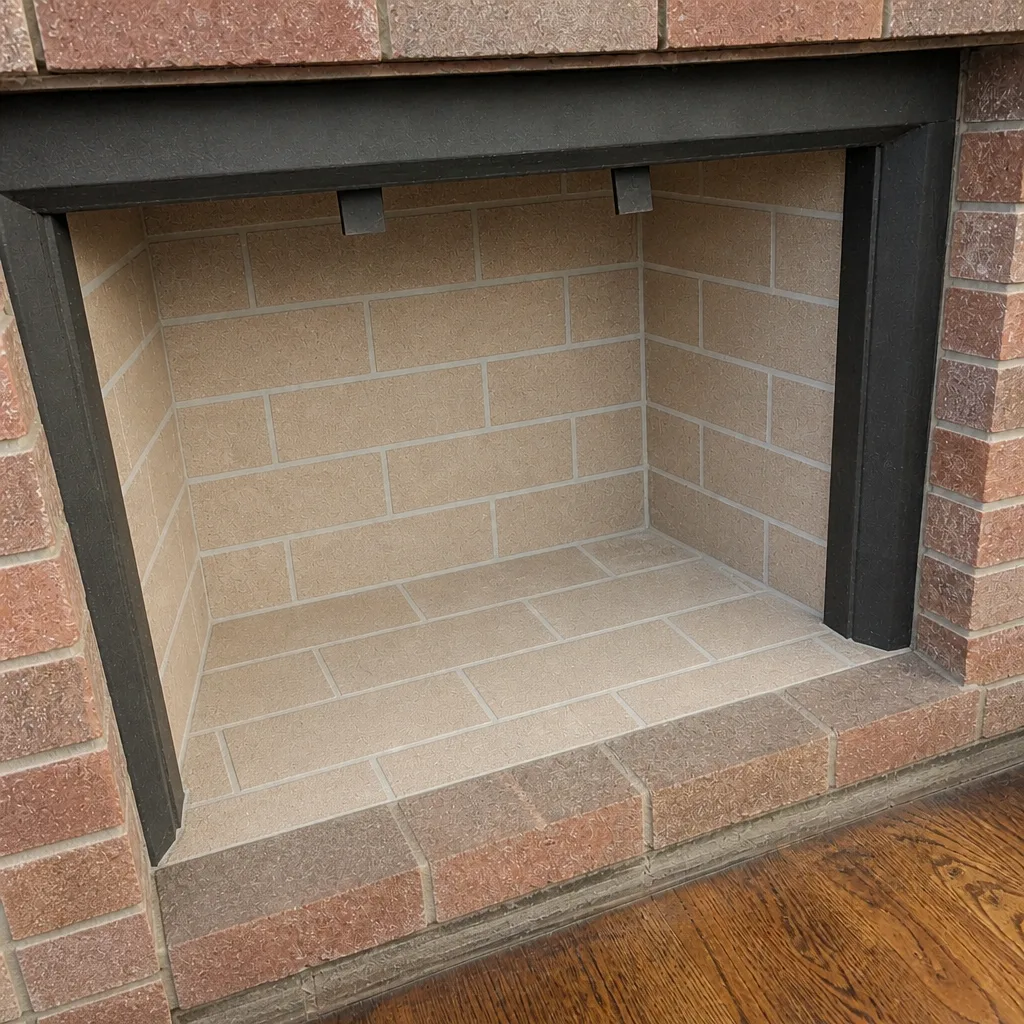
See the difference
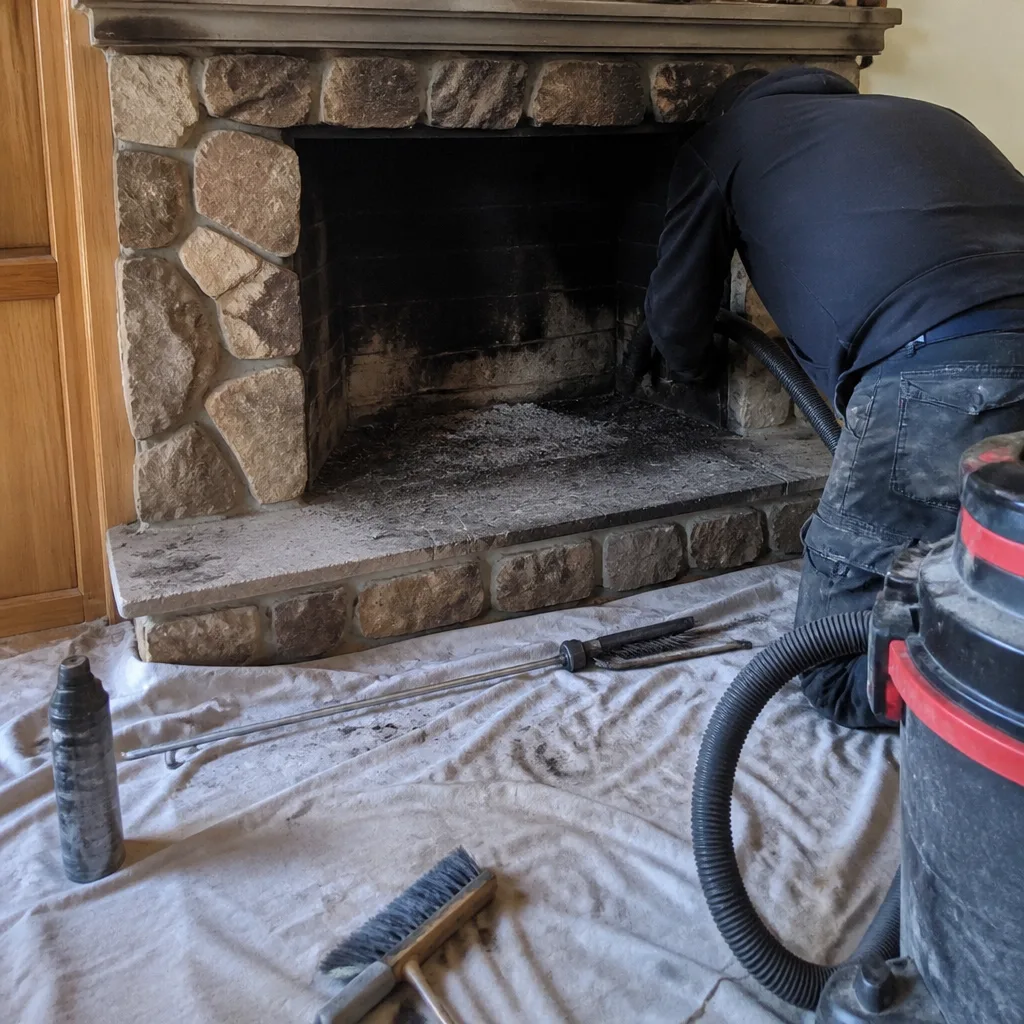 Before
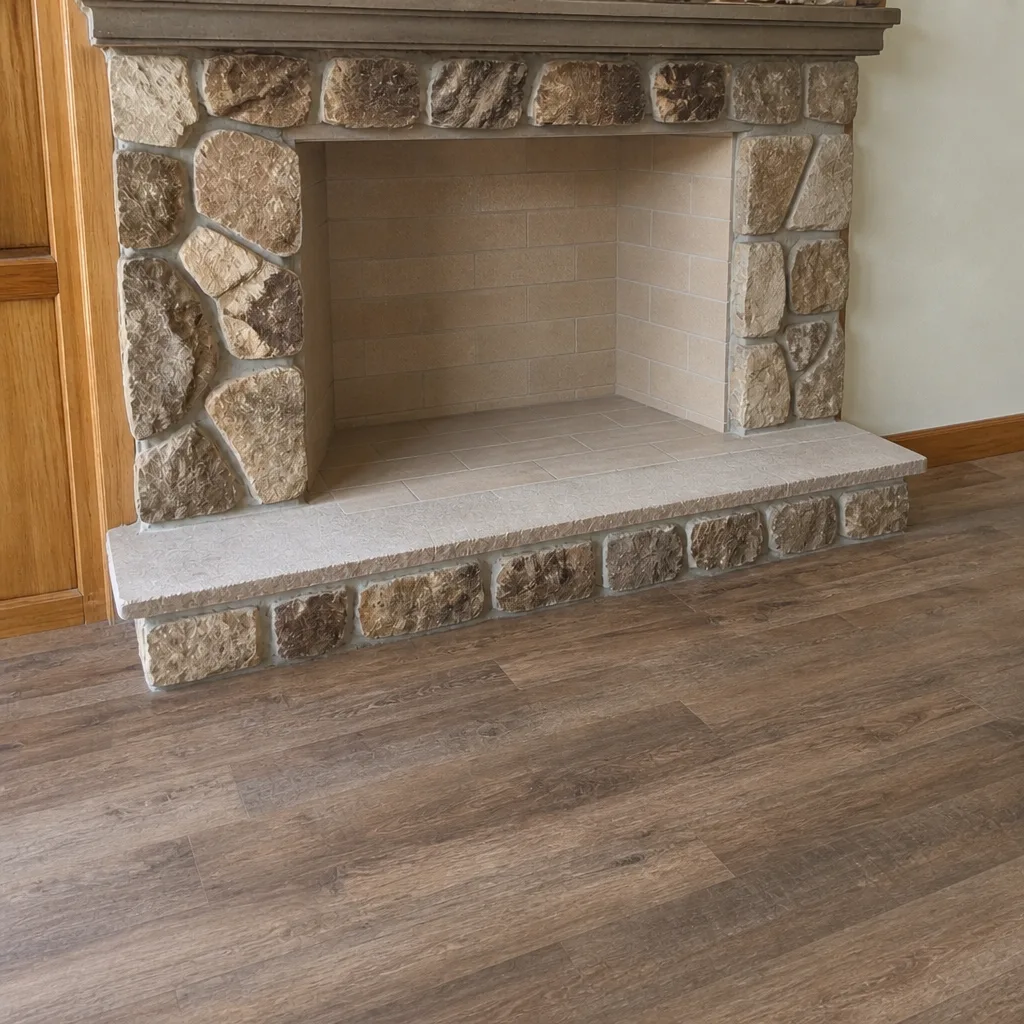 After
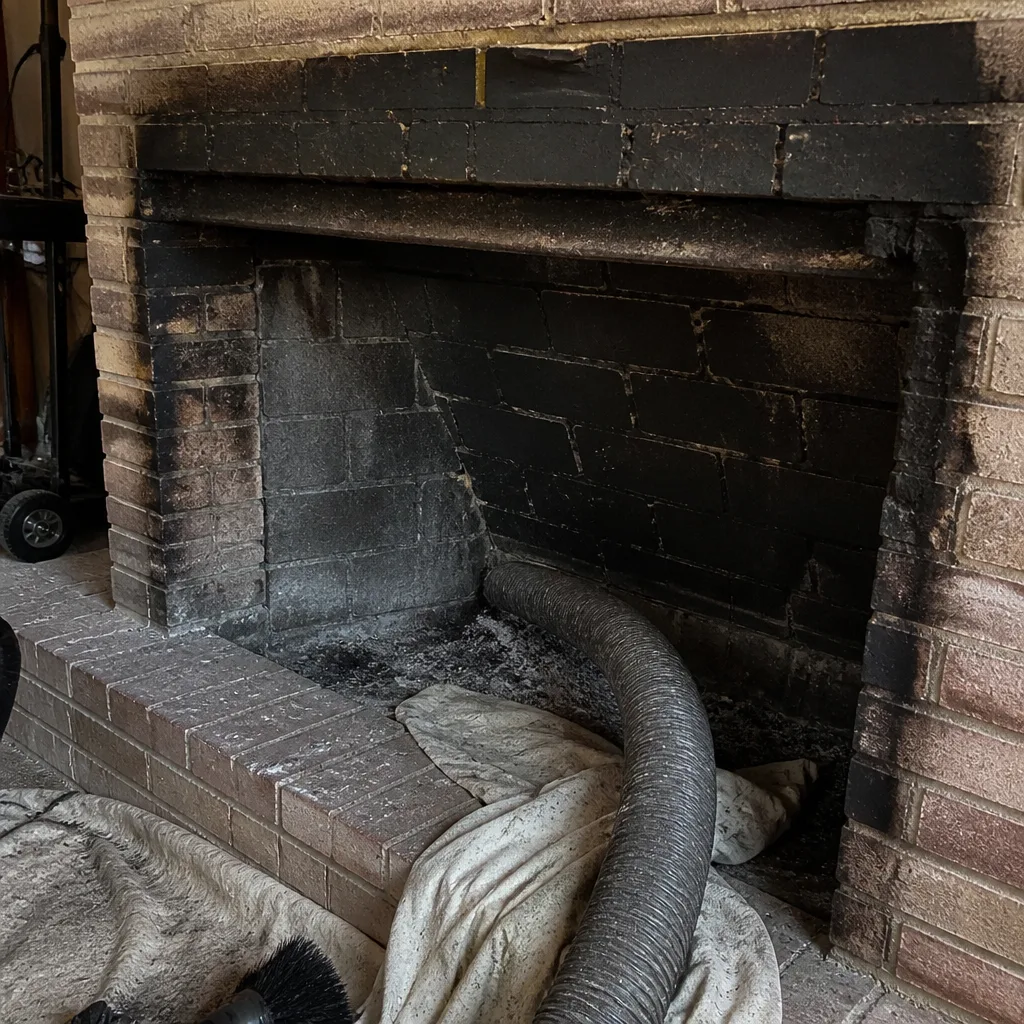 Before
 After
 Before
 After
When to Call a Professional
Call a chimney specialist if you have noticed any of the following: a smoky smell in summer with no fire lit, white staining that has appeared on exterior masonry, a damper that no longer moves smoothly, smoke that lingers and rolls in the firebox during the first minutes of a fire, or brick faces that have started to flake. Those are all early signals, and early signals are the best time to act because the smallest jobs live there.
Chimney Sweep Enterprise handles the whole loop in one place: chimney sweep, chimney repair, and chimney inspection. That means the findings from an inspection are acted on by the same specialist, not handed to someone else. We offer free estimates in Enterprise. Call (855) 752-5896. We answer 24/7. Fast dispatch from 7am to 7pm, Sunday through Friday.
Frequently Asked Questions
Annually for most wood-burning fireplaces, with the interval adjusted based on what the inspection finds and how heavily the fireplace is used. In our desert climate, we recommend booking before the burning season rather than after the first cold snap, because the schedule fills as the weather turns. Call (855) 752-5896 for an exact quote; estimates are free.
Yes, and it’s worth an inspection. White staining (efflorescence) means water has been absorbing into the masonry and migrating back out through wet-dry cycles, which is common in the monsoon months. It doesn’t mean your chimney is failing. It means the path water takes into the masonry needs a closer look. Call (855) 752-5896 to book an inspection; estimates are free.
Because creosote deposit is off-gassing in the heat. A campfire smell in warm weather with no fire lit is one of the earliest reliable signs that the chimney needs a cleaning. It shows up in late stage 1 or early stage 2, which is well before any visual failure. Call (855) 752-5896 for an exact quote; estimates are free.
It’s worth having looked at. A damper that changed from smooth to stiff can indicate deformation in the liner or smoke chamber, which narrows the throat and affects draft. Don’t force it. Book an inspection and let a specialist read it. Call (855) 752-5896 to schedule; estimates are free.
The deposit keeps building and gets harder to remove. Stage 2 creosote bakes onto the flue and stage 3 creosote glazes. Glazed creosote is the fuel a chimney fire uses, and a hot fire of that kind can damage flue tiles and let heat reach the structure around the chimney. The other cost is time: what starts as a routine sweep can become a repair job. Call (855) 752-5896 for an exact quote; estimates are free.
No, and not because of some rule. A proper cleaning requires the right brushes, camera tooling to see what’s happening inside the flue, and the training to recognize the difference between a routine deposit and a stage 3 hazard. High-tension and glazed creosote is a genuine safety concern, and the work belongs to a trained professional. Chimney Sweep Enterprise exists for exactly this. Call (855) 752-5896; estimates are free.
The Bottom Line
The dramatic symptoms are late symptoms. The useful warning signs are the quiet ones: a faint campfire smell in summer, white staining on the masonry after the wet season, smoke that rolls instead of rising, brick faces that flake from moisture instead of cracking from heat, and a damper that changed from smooth to stiff. Each of those gives you a chance to act before the problem gets expensive.
Reading the early signals is the whole game, and it works best with a system-level view of the chimney, because a chimney is a system. That’s how we treat it. Whether you need a sweep, a repair, or a full inspection, the same specialist can handle all three, which means findings don’t sit waiting for another company to arrive. If you’re in Enterprise and something on your chimney looked off this year, get it looked at now. Call (855) 752-5896 for a free estimate. We answer 24/7. Fast dispatch from 7am to 7pm, Sunday through Friday. You can also read more about the local service area at Enterprise.
Written by the team at Chimney Sweep Enterprise.