
Last updated November 16, 2026
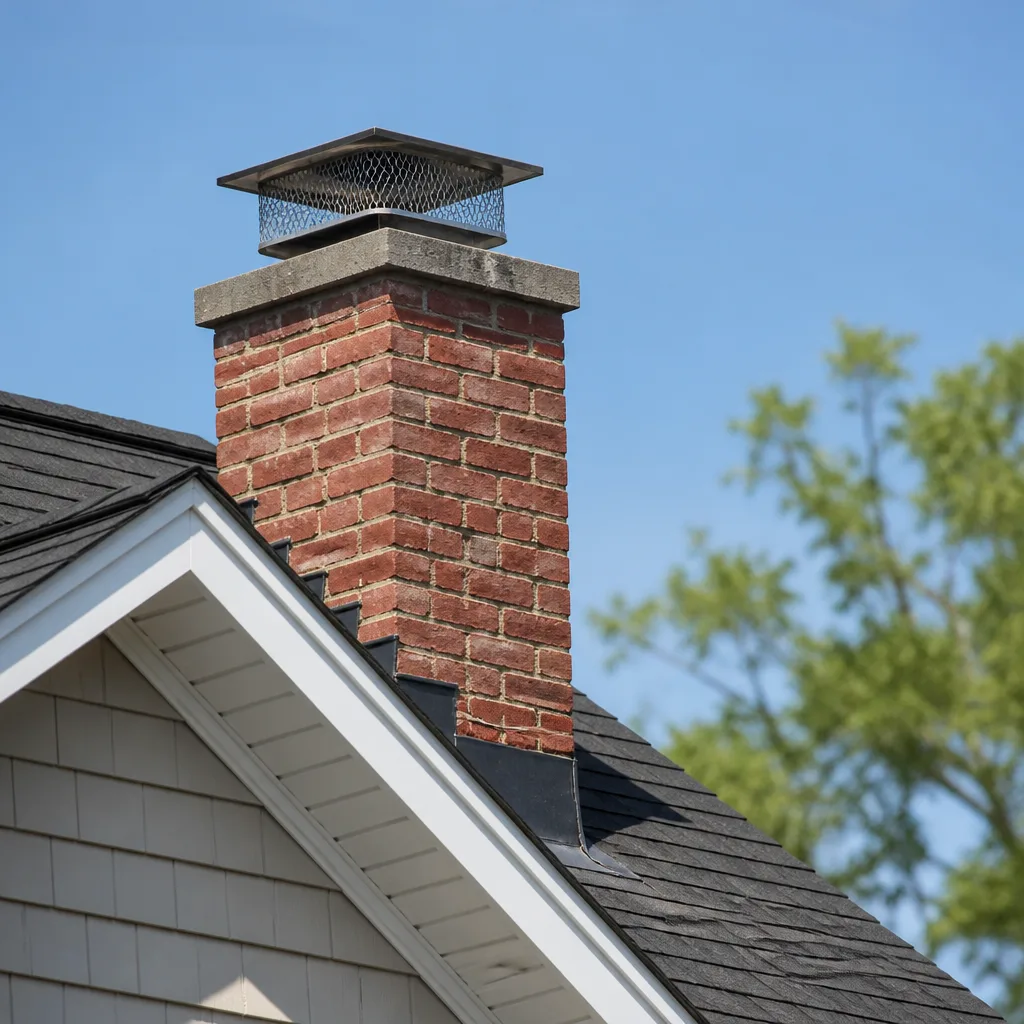 Sweep & inspection
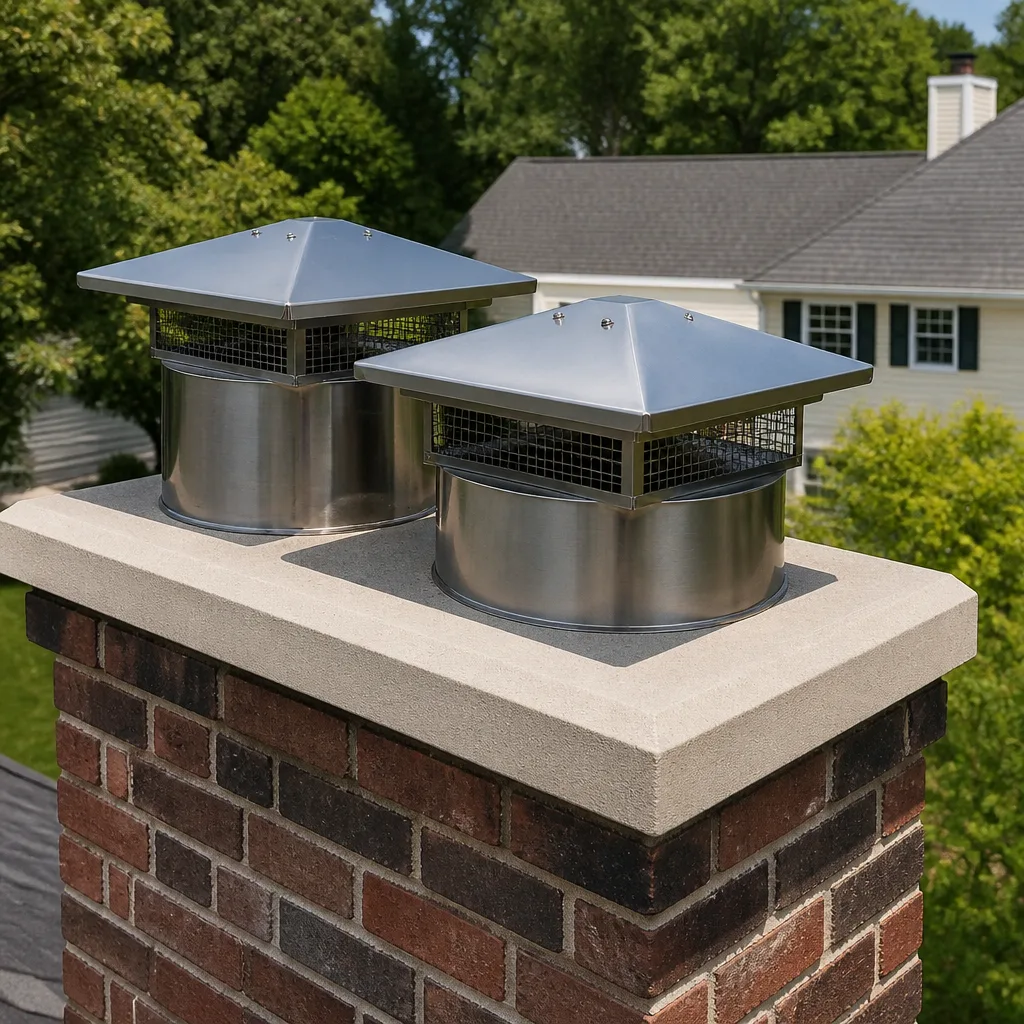 Caps & crowns
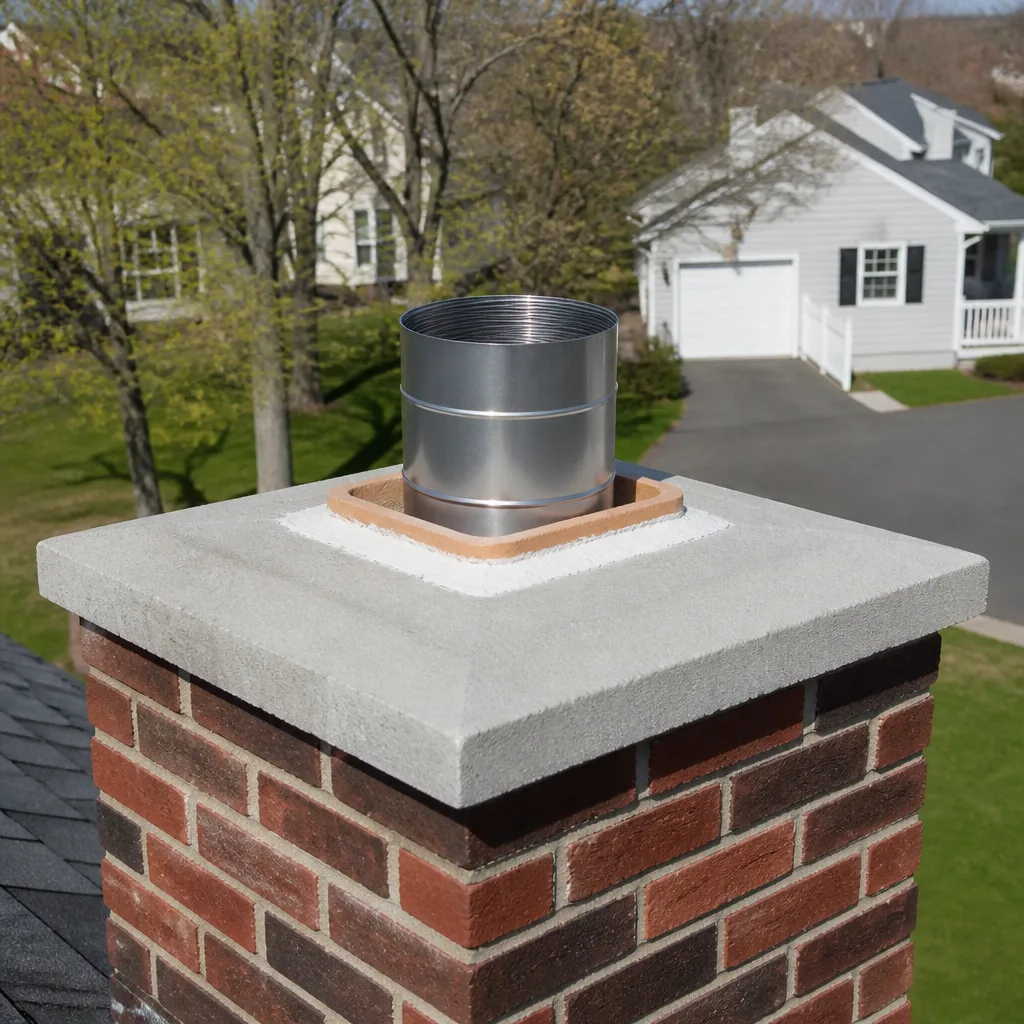 Flue relining
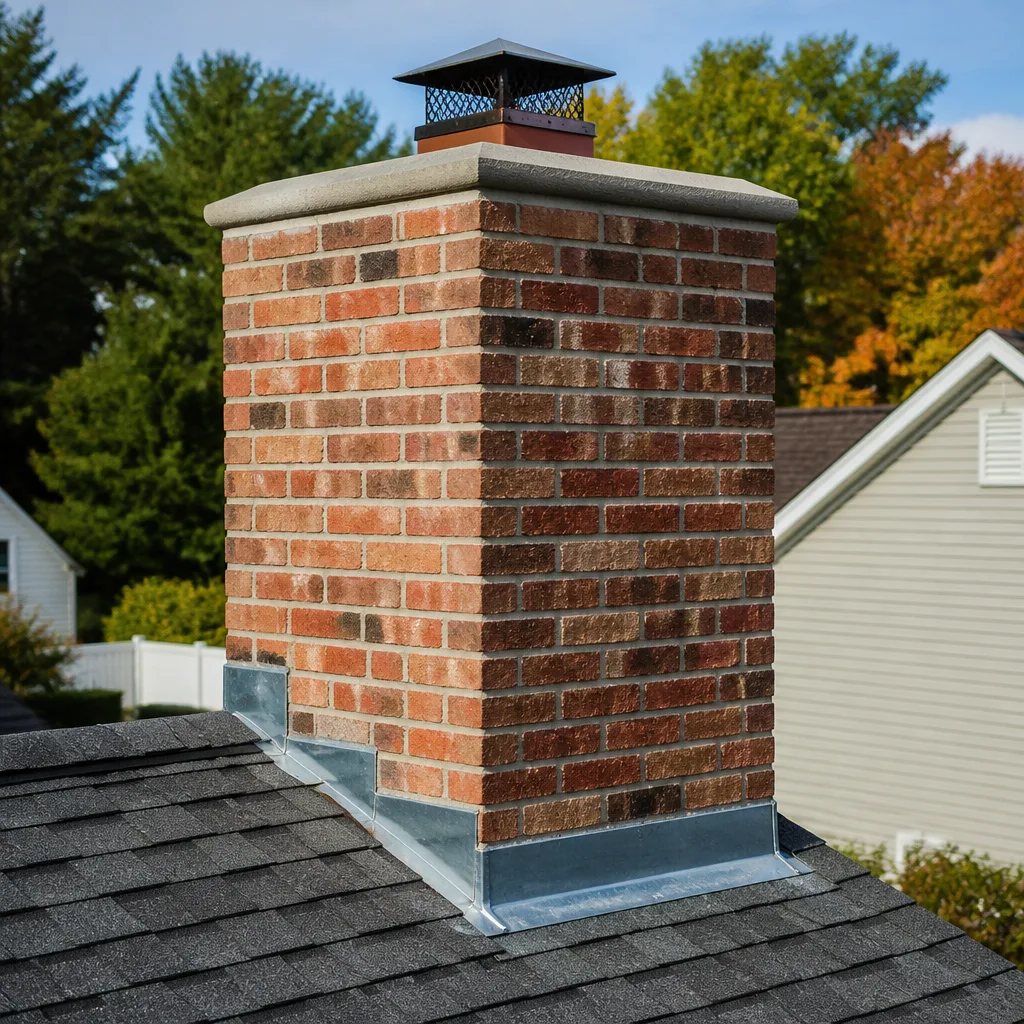 Masonry repair
 Gas fireplace service
Level 1 sweep and inspection to the NFPA 211 annual standard - flue, crown, cap, and flashing checked and photographed
Chimney sweep logs do not sweep chimneys. They loosen some creosote - which then falls where a brush and vacuum still have to collect it.
DIY vs Professional Chimney Cleaning: The Enterprise Homeowner’s Decision Guide
A $60 chimney brush kit from the hardware store will move creosote. It will not tell you that the tile liner behind that creosote has a four-inch crack venting carbon monoxide into your wall cavity. That gap between “the flue looks cleaner” and “the chimney is actually safe” is the whole decision in one sentence. This guide is written for Enterprise homeowners who want to understand exactly which tasks they can handle, which ones need professional equipment and materials, and where the line sits. We’ll walk through the tasks that are genuinely DIY-able, the ones that aren’t, what your insurance carrier actually cares about, and how the math works when a sweep delays a diagnosis. By the end you’ll know whether to buy the brush or book the sweep.
Quick Answer
Basic stage 1 creosote brushing, cap cleaning, exterior crown inspection, and ash removal are legitimately DIY tasks a careful homeowner can do with the right equipment. Everything past that – liner camera scans, rotary power sweeping for stage 2 creosote, smoke chamber coating, any repair of spalling tile or glazed stage 3 creosote – requires professional tooling, professional-grade materials, and documentation your insurance carrier will actually accept. In most Enterprise homes, the honest answer is: DIY the light maintenance, book a professional for the annual inspection and sweep, and never open up a chimney that shows signs of a previous fire event on your own.
Styles & brands we work with
- Sweep & inspection
- Caps & crowns
- Flue relining
- Masonry repair
- Gas fireplace service
Table of Contents
- What you can legitimately DIY
- Tasks that require professional equipment
- Insurance and liability reality
- The cost-benefit math
- Understanding creosote degrees (and why it matters)
- The one scenario where DIY is unambiguously wrong
- How a professional sweep actually works
- Common mistakes to avoid
- When to call a professional
What You Can Legitimately DIY
We’re not going to tell you that every chimney task requires a professional. That would be dishonest, and it would waste your money. There’s a real list of maintenance tasks a careful homeowner with the right tools can handle without risking their home or their safety. Here’s what falls into that category:
- Cap and screen cleaning. A chimney cap accumulates soot, leaves, and debris over a season. A soft brush, a garden hose, and a ladder you’re comfortable on will handle it. Note: if the cap is loose, cracked, or missing a screen, that’s a repair, not a cleaning. Gelco chimney caps are what we specify for replacements because a generic cap tends to fail faster than the masonry it’s supposed to protect.
- Exterior crown inspection. Walk the roofline and look at the crown – the concrete or masonry top that sheds water away from the flue. Cracks, spalling, or missing crown material are visible to a careful eye from the roof or ground with binoculars. You’re not repairing it, just noticing it.
- Ash removal. Empty the firebox ash pan when it fills. Keep a metal container with a lid, and let ash sit for at least 24 hours before you move it outside. Ash can hold live embers for a surprisingly long time.
- Basic stage 1 creosote brushing. With the right rotary brush kit sized for your flue and the right extensions, you can brush loose, sooty, flaky creosote off the flue walls. This is the creosote that builds up with normal wood burning and is the easiest to remove. It’s also the creosote that a brush is actually designed for.
- Damper operation checks. Open and close the damper by hand and make sure it moves freely. A stuck damper is a sign something’s wrong. Don’t force it.
Notice what’s not on that list. Nothing that requires you to look inside the flue with a camera. Nothing that involves glazed or tar-like creosote. Nothing that involves repairing masonry, tile, or the smoke chamber. That’s the boundary, and in our experience it’s where most DIY plans go wrong – a homeowner who’s successfully brushed their own chimney a few times starts to believe they can handle everything the chimney throws at them.
The reason the DIY tier is limited isn’t that you’re not capable. It’s that the tools and products that solve the tier above it aren’t sold at retail. A rotary power sweep is not a stiffer wire brush. A HeatShield resurfacing system is not a bucket of mortar. These are professional tools for a reason.
Tasks That Require Professional Equipment
This is where the DIY vs professional decision actually lives. Every task below needs tooling, training, or materials that aren’t available to a homeowner working from a hardware store aisle.
- Liner camera scans. A professional inspection uses a camera on a flexible rod that travels the full length of the flue. That camera shows cracked tiles, missing mortar joints, gaps at offset bends, and hidden damage that’s completely invisible from the firebox or the roof. A visual inspection from above stops at the first elbow. A camera inspection doesn’t.
- Rotary power sweeping for stage 2 creosote. Stage 2 creosote is the tar-like, hardened layer that hand brushes and standard brush kits don’t move. It requires a powered rotary head with the right whip or chain, running at controlled speed so it strips the creosote without tearing up the tile liner. This is the equipment that separates a real sweep from a brush-and-hope. Our chimney sweep work uses this tooling for exactly that reason.
- Smoke chamber coating. The smoke chamber – the sloped section between the firebox and the flue – is one of the most overlooked parts of the system. Its rough masonry surface is a creosote magnet, and it’s often where chimney fires start. Coating it with a product like Smoky Mountain Saver smooths the surface and gives creosote nothing to cling to. Not a DIY product, not a DIY job.
- Liner resurfacing with HeatShield. HeatShield is a resurfacing system for clay tile liners that restores the flue’s inside surface without pulling the whole chimney apart. It’s formulated, applied, and cured to spec. It is not mortar, and it is not something you can buy off the shelf.
- Flexible liner installation. A DuraFlex liner system is what gets installed when the existing tile liner is too far gone to resurface. DuraFlex is a professional-grade flexible liner spec’d by chimney specialists nationwide for gas and wood applications. Installation requires sizing, insulation, top-plate fitting, and a proper connection at the appliance. All of which has to be documented for the manufacturer’s warranty to be valid.
- Masonry repair. Spalling tile, cracked mortar joints, damaged crown, and failed flashing are repair work, not cleaning work. We handle this through chimney repair after a proper inspection identifies the specific issue.
Recurring theme: professional-only tasks aren’t professional-only because of effort. They’re professional-only because the tooling or the material isn’t in the consumer supply chain, and because doing the task wrong is dangerous in a way that doesn’t announce itself until later.
Insurance and Liability Reality
This is the section most DIY guides skip. When a chimney-related claim lands on your insurance carrier’s desk, the first question isn’t “was the chimney clean?” It’s “who documented the chimney’s condition, and when?” That’s a different question, and it’s the one that decides whether the claim gets paid.
Here’s the practical version. Most homeowner policies treat routine maintenance as the homeowner’s responsibility, which means “the chimney was dirty” isn’t a covered loss – it’s a maintenance failure. But “the chimney was inspected on this date, found sound, swept, and here’s the report with photographs” tells your carrier the loss wasn’t from neglect. That distinction matters at claim time. It matters even more if there’s ever a dispute about whether a fire started inside the chimney or spread from somewhere else.
Homeowner-performed maintenance isn’t illegal or invalid. Nothing in a standard policy voids coverage because you swept your own flue with a brush kit. What gets murky is liability. If your DIY work damages a tile liner or misaligns a liner connection and the result is a later fire or a carbon monoxide event, you’re the one who performed that work, and the paper trail reflects it. A professional sweep comes with documentation, a record of what was found, and a named party who stands behind the work. That’s what your carrier actually wants to see.
Our chimney inspection includes a photo report for exactly this reason. Not because we enjoy paperwork, but because when a claim is filed, homeowners need evidence that the system was inspected and what it looked like at that moment. A camera image of a cracked tile dated six months before a claim is worth more than any amount of verbal reassurance.
One more piece of the liability reality: if you’re ever selling the home, a professional inspection report showing the chimney’s condition is a document buyers and their inspectors accept. A homeowner’s own word that “the chimney is fine” carries no weight in a real estate transaction. That’s not a knock on your honesty – it’s just how transaction documentation works.
The Cost-Benefit Math
Let’s be honest about the numbers. On the surface, DIY wins the cost comparison. A brush kit, extension poles, and a drop cloth run somewhere in the range of the cost of a single professional sweep, and the kit gets reused season after season. If that were the whole story, every careful homeowner would DIY forever.
But the math has a second column, and it’s the one that catches people. The pencil whips around when a light sweep delays a diagnosis. A four-inch crack in a tile liner, once it’s been swept around for a couple of seasons, can widen into a repair that requires a liner – not because the chimney was neglected, but because nobody looked at it with a camera. Resurfacing a liner and installing a new one aren’t in the same price bracket, and the gap between them is usually bigger than several years of professional sweeps combined.
Here’s the framework we suggest to Enterprise homeowners working through this decision:
- DIY is genuinely economical when: your chimney is in solid shape, burns well-seasoned wood, has a documented professional inspection in the recent past, and you’re only keeping up with light stage 1 creosote between professional visits.
- DIY delays a diagnosis when: you haven’t had a camera inspection at your current home, you’ve recently moved, the chimney has any history of creosote buildup you didn’t create, or you’re seeing signs you can’t explain (staining, odor, smoke rollback, draft failure).
- The math favors professional when: the cost of an inspection and sweep is smaller than the cost of the most likely repair that inspection would catch. For most wood-burning homes, that’s almost always true.
- The math is a false economy when: you skip an inspection altogether to save the cost, and end up paying for a repair you could have caught early. That’s not saving – it’s deferring a bill you didn’t know you owed.
When we quote our Chimney Sweep Enterprise work, the written estimate sets the final price, and an inspection identifies whether there’s anything worth talking about before any repair is proposed. That order matters. Inspection first, then conversation, then decision.
Understanding Creosote Degrees (and Why It Matters)
Creosote is not one substance. It’s a family of deposits that form in stages, and each stage needs a different tool. Understanding the degrees is the single most useful thing a homeowner can know when deciding whether to pick up the brush.
Stage 1 creosote is the light, sooty, flaky deposit that a brush lifts easily. It’s the normal byproduct of wood burning and it’s what a homeowner can legitimately remove with a rotary brush kit and the right technique. Most of what builds up in a well-operated, properly drafted chimney that burns seasoned wood is stage 1.
Stage 2 creosote is the tar-like, hardened, sometimes glossy layer that forms when the chimney runs cool, when wood is wet, or when draft is poor. Hand brushing and consumer brush kits do not remove stage 2 creosote. You need a powered rotary sweep with a specialized head – the kind of tooling a professional sweep carries because there’s no retail equivalent. Trying to chip stage 2 off yourself risks damaging the tile liner and doesn’t actually remove it.
Stage 3 creosote – sometimes called glazed creosote – is a hard, shiny, fuel-rich deposit that’s the most dangerous form and the hardest to remove. A chimney at stage 3 is a fire risk. It’s also not a DIY job at any level. Stage 3 clearance requires professional chemical treatment and mechanical removal, followed by an inspection to confirm the liner is sound.
Why this matters for the DIY decision: you don’t always know which stage you’re at by looking from the firebox. A homeowner who has burned wood for years may have a chimney at stage 2 and assume it’s stage 1 because the visible deposits look manageable. The only reliable way to know is a camera inspection. Once you have that baseline, you can be honest with yourself about whether you’re doing stage 1 maintenance or masking stage 2 buildup. If you’re not sure, Enterprise homeowners can book an inspection and find out – without committing to anything beyond the inspection itself.
The One Scenario Where DIY Is Unambiguously Wrong
There are three situations that don’t require debate. If any of the following is true, don’t pick up a brush, don’t assume you’ll “take a look,” and don’t postpone. Call a professional and get an inspection on the calendar.
- Any chimney that shows signs of a previous chimney fire. Signs include heat-discolored metal on the cap or damper, cracked or pitted tile liner, a “puffy” appearance to the creosote, or a chimney that smells acrid or smoky when it hasn’t been in use. A prior fire event means the chimney has already been stressed. It’s not the place for a trial run.
- Spalling tiles. If the tiles inside the flue are flaking, cracked, or coming apart at the joints, a brush is going to make it worse. Spalling tile means the liner surface is already compromised. Brushing against it can loosen more tile, which can then obstruct the flue or damage the appliance connection above. That’s a professional inspection and repair scenario, not a cleaning scenario.
- Stage 3 glazed creosote. A hard, shiny, tar-like coating on the flue walls is a fire hazard and it can’t be safely removed by consumer tools. Professional chemical treatment followed by mechanical removal is the only safe path, and it’s followed by an inspection to confirm the liner survived the treatment.
There’s also a fourth scenario that we want to name explicitly: carbon monoxide concerns. If anyone in the household has experienced headaches, dizziness, or unusual fatigue in a home with a wood-burning appliance, stop using the fireplace or stove and call a professional immediately. Don’t brush the chimney first. The system needs to be evaluated, not cleaned.
A chimney that shows any of those signs is a system that needs a professional who can read it, not a homeowner with a brush and good intentions. Getting that call wrong can be catastrophic, and no brush kit is worth that risk.
How a Professional Sweep Actually Works
A professional sweep is a multi-step process, not a single act. Understanding what actually happens helps you evaluate whether the service you’ve booked is real, and helps you decide what you’re paying for.
- Set up and protect. Drop cloths and a HEPA vacuum go down before anything else. A professional sweep shouldn’t leave soot on your floor, and if the setup doesn’t include a vacuum, that’s a warning sign.
- Inspect first. Before sweeping, the technician looks at the firebox, damper, smoke chamber, and flue. Camera scan if needed. This is when a professional finds the cracked tile, the missing mortar joint, or the creosote stage – before touching anything. Our chimney inspection is the formal version of this step.
- Sweep by hand and by rotary tool. Hand brushing handles stage 1 creosote on the reachable surfaces. The rotary sweep with the right head handles the flue walls and the more stubborn deposits. The tool is matched to the liner material – you don’t run a rotary head on a fragile tile liner without the right whip.
- Clear the smoke chamber and firebox. Creosote buildup on the smoke chamber shelf is common and it’s a real fire risk. Clearing it is part of a proper sweep. Coating with Smoky Mountain Saver is a separate repair step, done only when the chamber needs it.
- Document findings. A camera shot of the flue before and after. Notes on the crown, cap, damper, and any issue found. This is the report that matters when insurance or repair comes up.
- Review with the homeowner. Walk through what was found, what was done, and what – if anything – needs attention before the next season. A truly misleading sweep is one that ends with “all good, see you next year” and no documentation.
Notice how much of that is inspection, not sweeping. The sweep is the visible work. The inspection is where the real value lives. That’s the point most DIY comparisons miss.
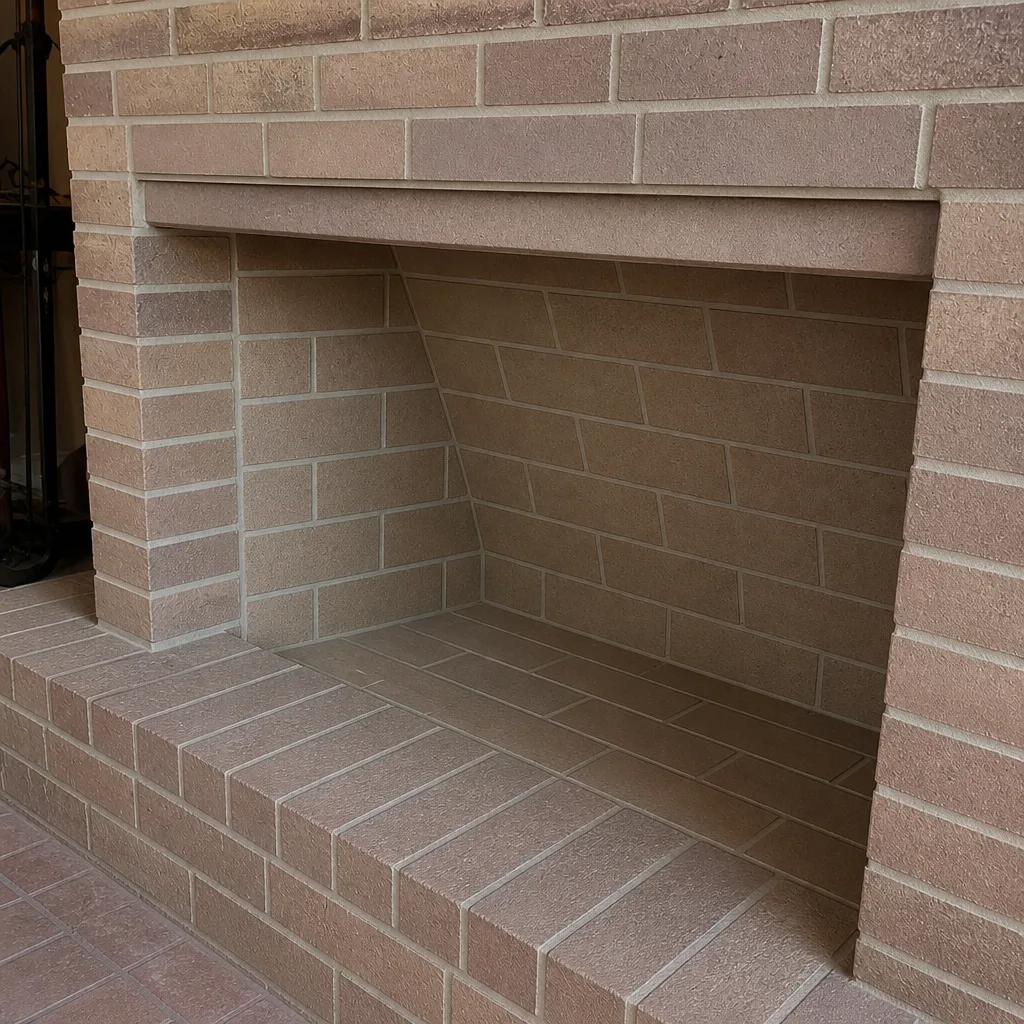
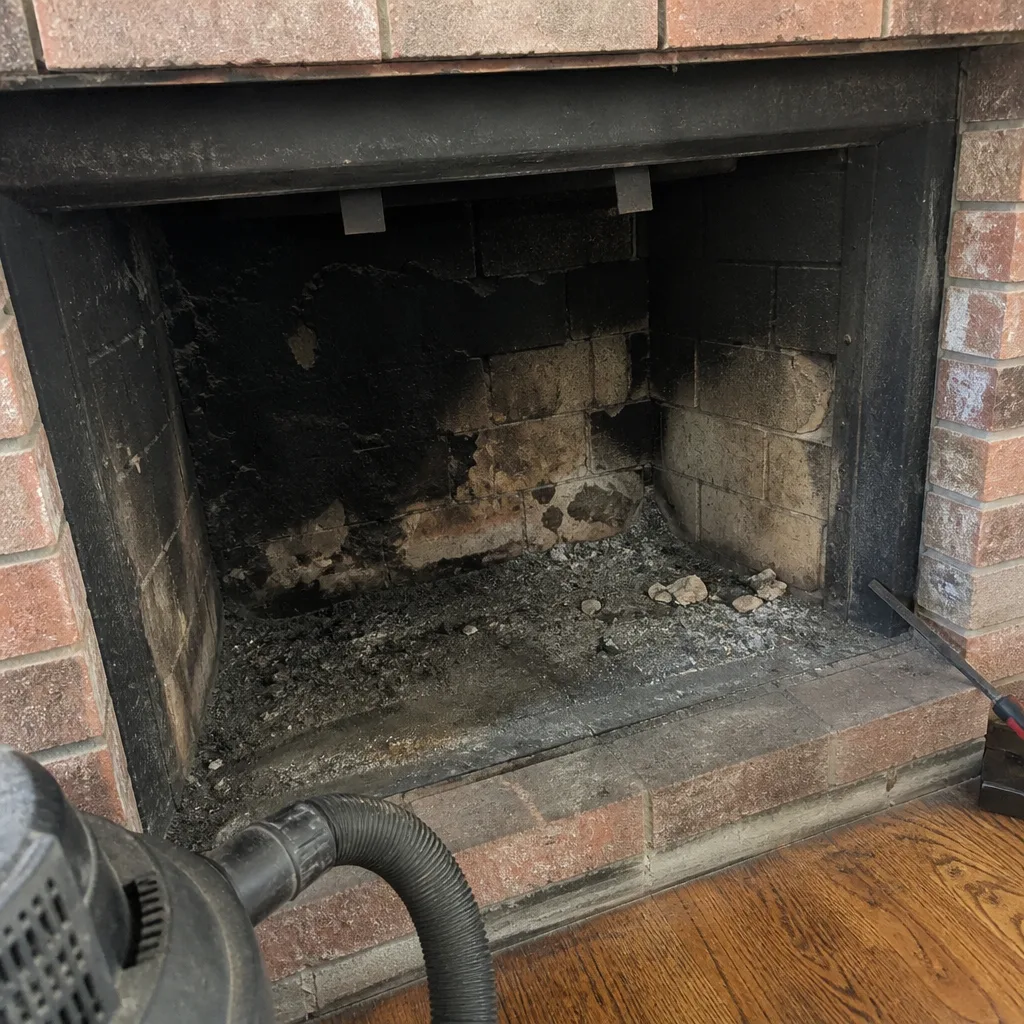
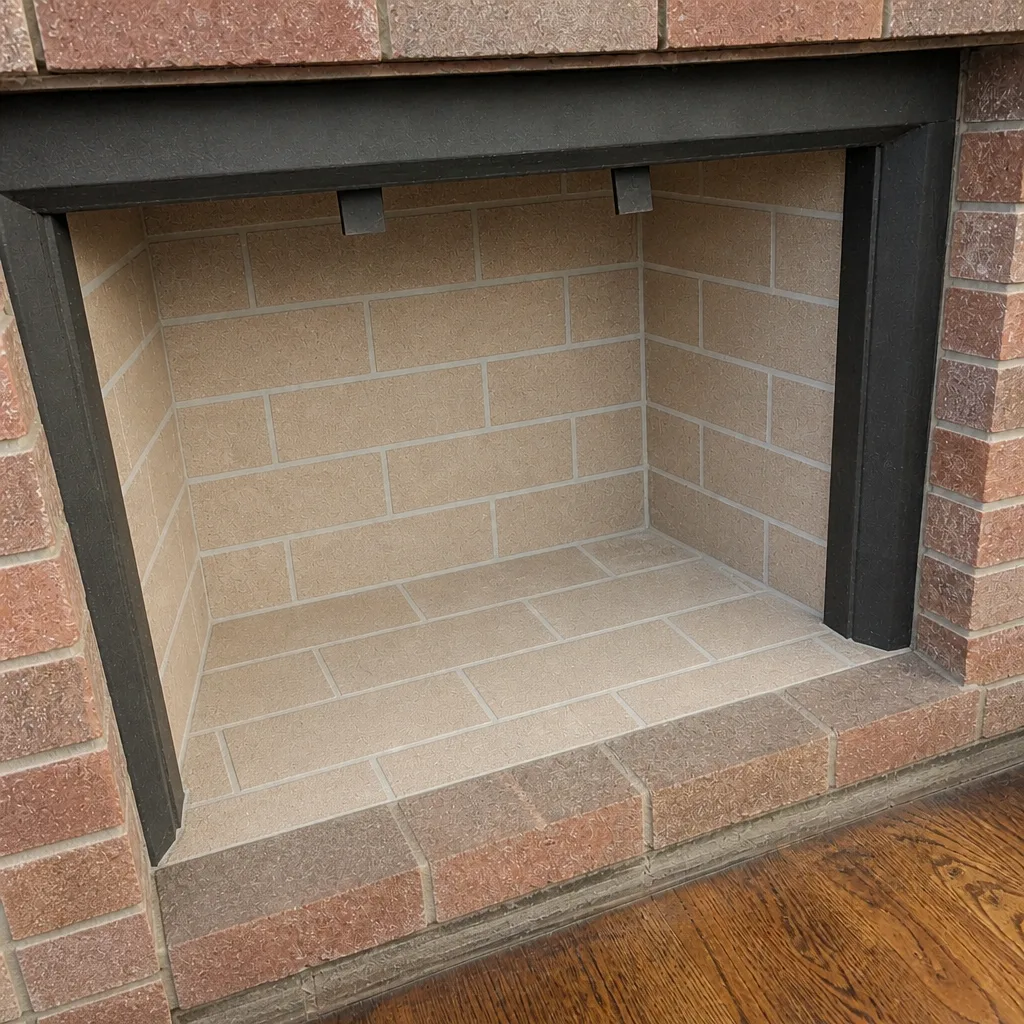
See the difference
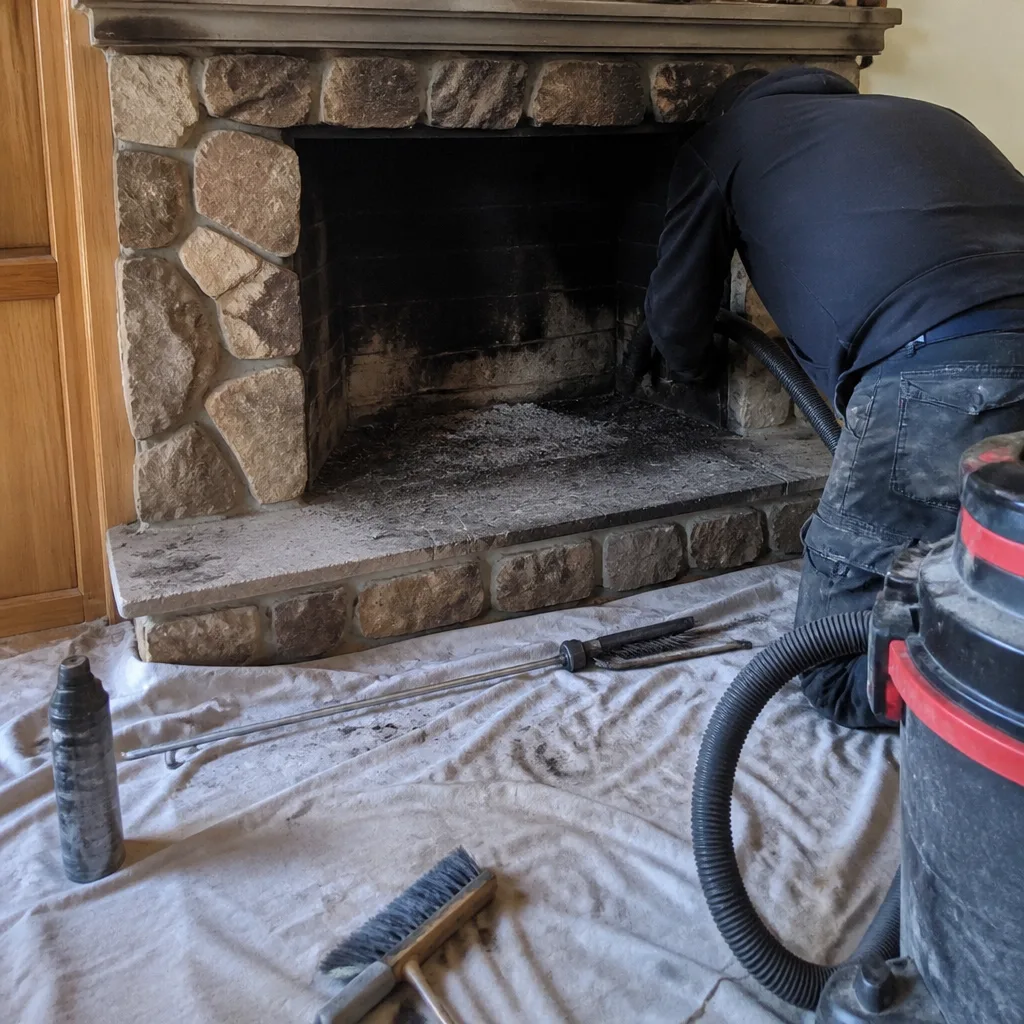 Before
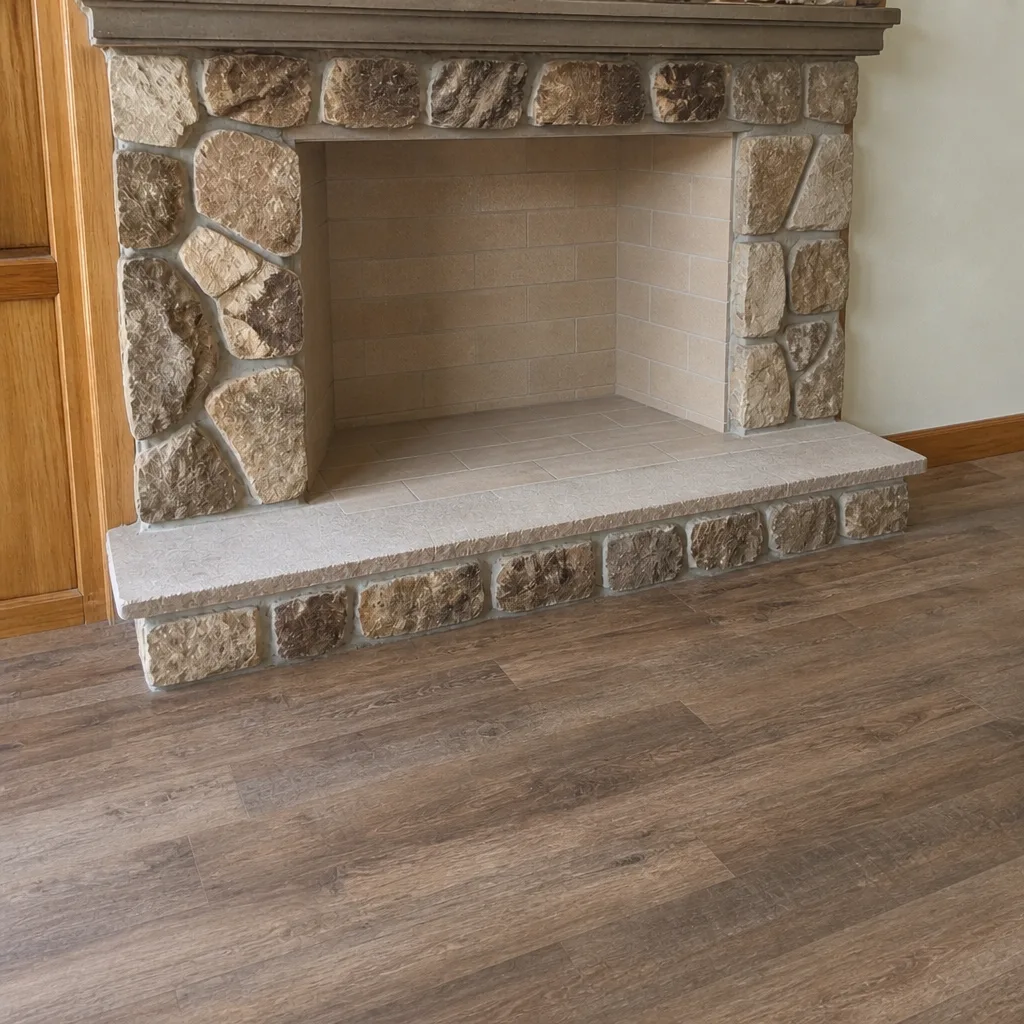 After
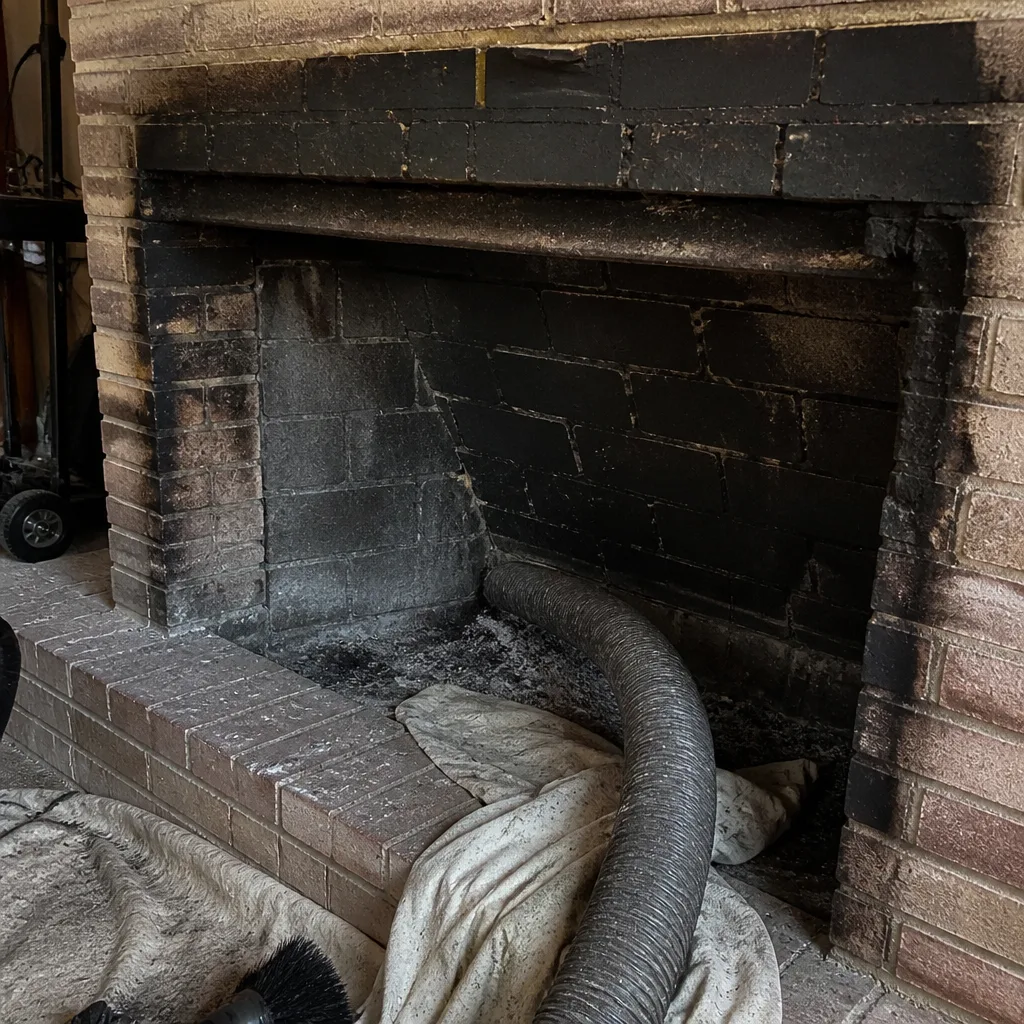 Before
 After
 Before
 After
Common Mistakes to Avoid
- Buying a brush kit and calling it a sweep. A brush kit handles stage 1 creosote on accessible surfaces. It does not scan the liner, clear the smoke chamber, or document the chimney’s condition. A homeowner who brushes annually without an inspection is gambling that nothing’s changed. Chimneys don’t send notices when something changes.
- Skipping the inspection because the chimney “looks fine.” Most liner damage is invisible from the firebox. Cracked tiles, missing mortar joints, and gaps at offset bends only show up on camera. The whole point of a professional inspection is finding what visual inspection can’t.
- Assuming the chimney is dry because the wood looks dry. Seasoned wood matters, but so does how the fire burns, how the draft pulls, and whether the flue is properly sized and insulated. Stage 2 creosote forms from cool flue gas, and cool flue gas can come from a dozen causes – not just wet wood.
- Not knowing whether the liner is insulated. In an Enterprise climate with dry, cold winter nights, an uninsulated liner runs cooler and accumulates creosote faster. When a DuraFlex retrofit or HeatShield resurface is done, insulation is part of the specification. Skipping it is a false economy that shows up next season.
- Ignoring the crown and cap. Water is the enemy of every masonry chimney, and a cracked crown or a loose cap is how water gets in. These are visible on a walk-around. Check them once a year and fix small problems before they become big ones.
- Chipping away glazed creosote. Stage 3 creosote isn’t removable by hand tools, and trying to chip it off damages the liner. It needs professional chemical treatment and mechanical removal. This is not a “try it and see” situation.
- Trusting a sweep that doesn’t produce documentation. If the sweep doesn’t include a photo report or a written record of findings, you’re not getting an inspection. When you file a claim or try to sell the home, you’ll wish you had the paperwork.
When to Call a Professional
Call when: the chimney hasn’t been inspected in over a year; you’re seeing smoke rollback, staining on the exterior, or creosote smells inside the house; the chimney has a history of heavy use with wet or unseasoned wood; you’re at stage 2 or stage 3 creosote; the tile liner shows spalling or damage; the cap or crown is cracked, loose, or missing; or there’s any sign of previous fire damage. Also call before the first cold snap if you’re going into a heating season without a recent inspection – the wait for a sweep gets long once the burning season starts. Chimney Sweep Enterprise offers free estimates in Enterprise – call (855) 752-5896. We answer 24/7, and fast dispatch runs from 7am to 7pm, Sunday through Friday. The right order is inspection first, then conversation, then decision – and the inspection is where we start.
Frequently Asked Questions
Yes, for stage 1 creosote on accessible surfaces – with a properly sized rotary brush kit, the right extension poles, drop cloths, and a HEPA vacuum. What you can’t do with a retail kit is scan the liner with a camera, remove stage 2 creosote, coat the smoke chamber, or document the chimney’s condition. That’s the boundary. Call (855) 752-5896 for an inspection when you want to know what’s actually inside the flue – the answer matters more than the brush.
Older guidelines suggest a sweep when there’s a quarter-inch of creosote buildup, and for most homes that works out to an annual inspection with a sweep when needed. But the schedule shifts based on how much you burn, whether the wood is seasoned, and how the flue drafts. The inspection is what sets the schedule – not a fixed calendar. Call (855) 752-5896 for a free estimate on an inspection and sweep.
That’s a question only a camera inspection can answer. Sweeping removes creosote. It doesn’t repair a cracked tile. If the camera shows spalling, cracked tiles, or gaps at joints, the options are resurfacing with a system like HeatShield or installing a DuraFlex flexible liner. If the liner is sound, sweeping is usually all that’s needed. Nothing gets recommended here without camera evidence the homeowner can see. Call (855) 752-5896 for an exact quote – estimates are free, and the written estimate sets the final price.
Sometimes nothing – for years, and that’s the trap. The realistic risk is that a slow-growing deposit or a hairline crack in a tile liner goes unnoticed until it’s a bigger repair or a fire risk. Most of the serious chimney repairs we see are problems that would have been small if caught a season earlier. Skipping a year is fine if you’ve had an inspection recently and the system was sound. Skipping years in a row is playing against the odds. Call (855) 752-5896 for a free estimate if it’s been a while.
Standard policies don’t typically void coverage because you swept your own flue. What gets complicated is documentation at claim time – a professional report with photos showing the chimney’s condition carries weight that a homeowner’s word doesn’t. Most carriers want to see that maintenance was tracked. If a claim is in your future, having an inspection report from a specialist is the document that does the heavy lifting. Call (855) 752-5896 for an inspection and photo report – it’s the record that matters when you need it.
We work with DuraFlex flexible liner systems, HeatShield resurfacing, Gelco chimney caps, Olympia Chimney products, Famco ventilation components, and Copperfield specialty parts. The reason it matters is traceability. Professional-grade materials are specified and documented by name, which lets a homeowner verify exactly what’s in the flue and keeps manufacturer warranties intact. Generic parts often fail faster than the masonry they’re protecting. If the last sweep quote didn’t name what was being installed, that’s worth asking about. Call (855) 752-5896 for a free estimate.
The Bottom Line
DIY chimney care is legitimate for stage 1 creosote, cap and screen cleaning, ash removal, and exterior crown inspection – the tasks where a brush kit and a careful eye actually do the job. Everything past that line needs professional tooling, professional-grade materials, and documentation your insurer will accept. The decision isn’t really “can I handle this?” It’s “can I see what needs handling, and can I prove I looked?” An inspection answers both questions. A brush kit answers neither. In Enterprise, book the inspection, get the camera report, and then decide what to do with it – the decision is yours to make, but only once you have the evidence in front of you. We’re here when you’re ready to see what’s actually there.
Chimney Sweep Enterprise offers free estimates in Enterprise. Sweep, repair, and inspection, all from one specialist. Call (855) 752-5896. We answer 24/7. Fast dispatch from 7am to 7pm, Sunday through Friday. We’re closed Saturday.
Written by the team at Chimney Sweep Enterprise.